|
Ailsa
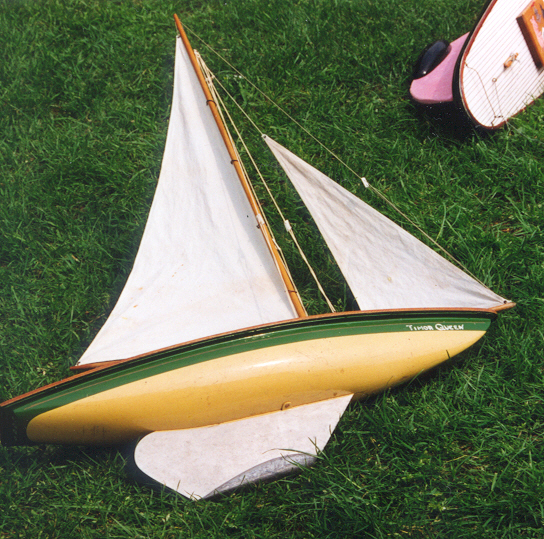
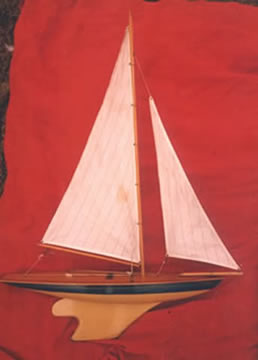
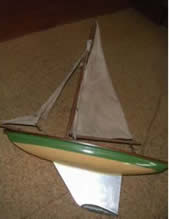
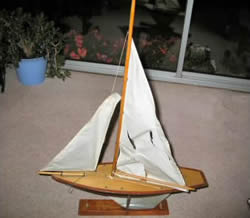
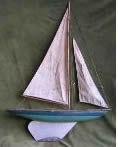
A 30" Ailsa
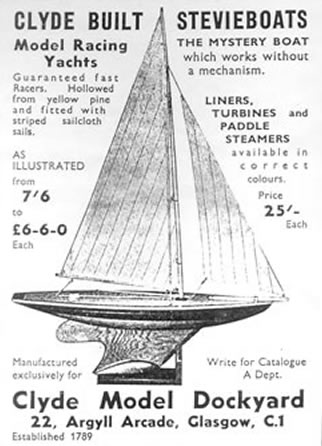
The early history of the Ailsa company is obscure, but there is evidence from an advertisement for the Clyde Model Dockyard that something very similar to an Ailsa was being produced for them in 1936. The hull and fin were wood and the lead appeared in two different forms. We can't be sure which came first, but it is likely that the the torpedo form, which became standard for most of the life of the company was a second thought. The sails before 1939 seem all to have been made from striped material. We assume that they were produced by Turner in Largs, but we have no firm evidence of this.
After the 1939 war the company went into
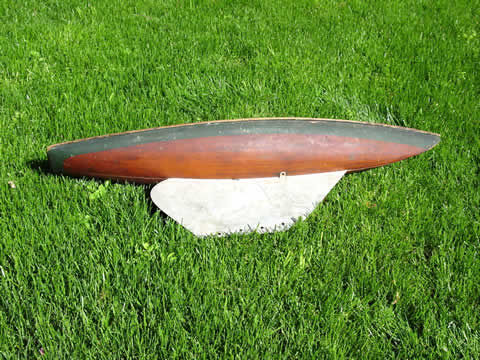
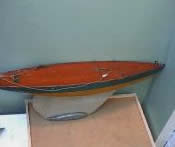
a much bigger scale of production. The early post war hulls were wooden
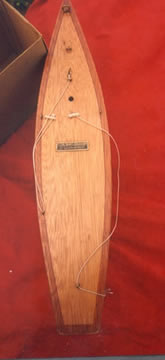
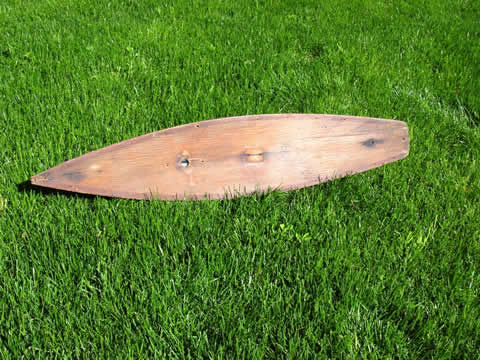
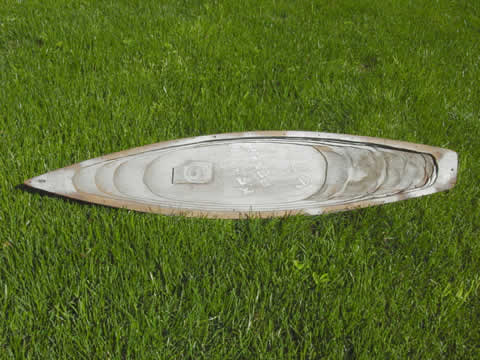
and appear to have had metal fins. The photos show a boat that came to light
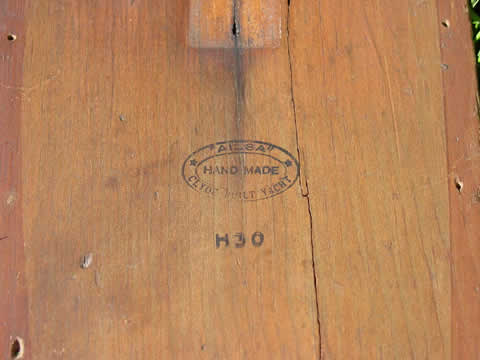
in the US which show the bread and butter construction and a deck logo thast
appears to be a rubber stamp and is thought to have preceded the ivorine
label that is found on most surviving examples.
The company name refers to the island of Ailsa Craig, a prominent feature of the seascape off Largs. The boats were marketed predominantly, though not exclusively, through 'MILBRO', a general leisure goods company who sold (among other things) catapults and child size fishing rods. I'm not sure whether they are the same organisation that was active in the model railway field in the 1950's and 60's. [At least one example has been found with a Clyde model Dockyard label on it, but it's definitely an Ailsa.] Turner designed and developed the boats to a high standard, spending a lot of time sailing prototypes against each other on the yacht pond at Largs. The boats were from the first intended to be sailed without a rudder and to give a good performance in the hands of a complete novice. They came in sizes from 12 inches to 21 inches in hull length. The business was started after the war and continued until well into the 1960's. Turner more or less retired in 1967, and died about 1970. His sons did not choose to continue the business. At one stage a dozen women were employed
on all aspects of the construction except the casting of the lead keels
which Turner felt was potentially dangerous. Boats were widely sold in the
UK and exported to most Commonwealth countries. Though the standard form of boat seems to have varied very little over the years, Turner experimented with keel forms and with automatic steering gears. Douglas's elder brother had one of these, which was inadvertently thrown out by his mother in the fairly recent past. Turner's experience was that in his market, anything that could go wrong or get bent was a bad idea and he reverted to the plate keel as almost fool proof. Douglas who, with his brothers, had a
fleet of these boats when they were children, writes at some length of their
superior performance, both in terms of sheer speed and their ability to
beat, reach and run, despite their fixed rudder. He says that they were
faster and more effective than any toy boat ever seen on the Largs pond,
and I'm prepared to believe him. Both examples that I have seen and sailed
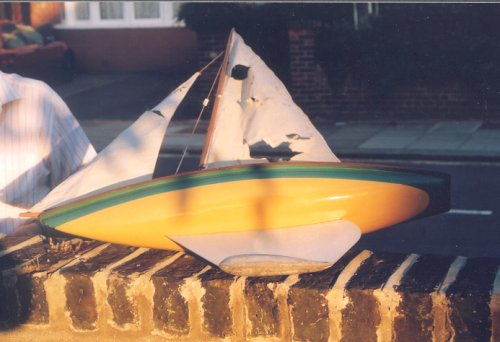
have been very impressive performers. As will be seen from the paras above, wooden
ones have turned up, as has a GRP example. The latter has sails which are
not terylene but made of very fine cotton which has treated with some form
of plastic. They are frayed beyond repair but are quite clearly a natural
fabric.
Sixteen years on
|